

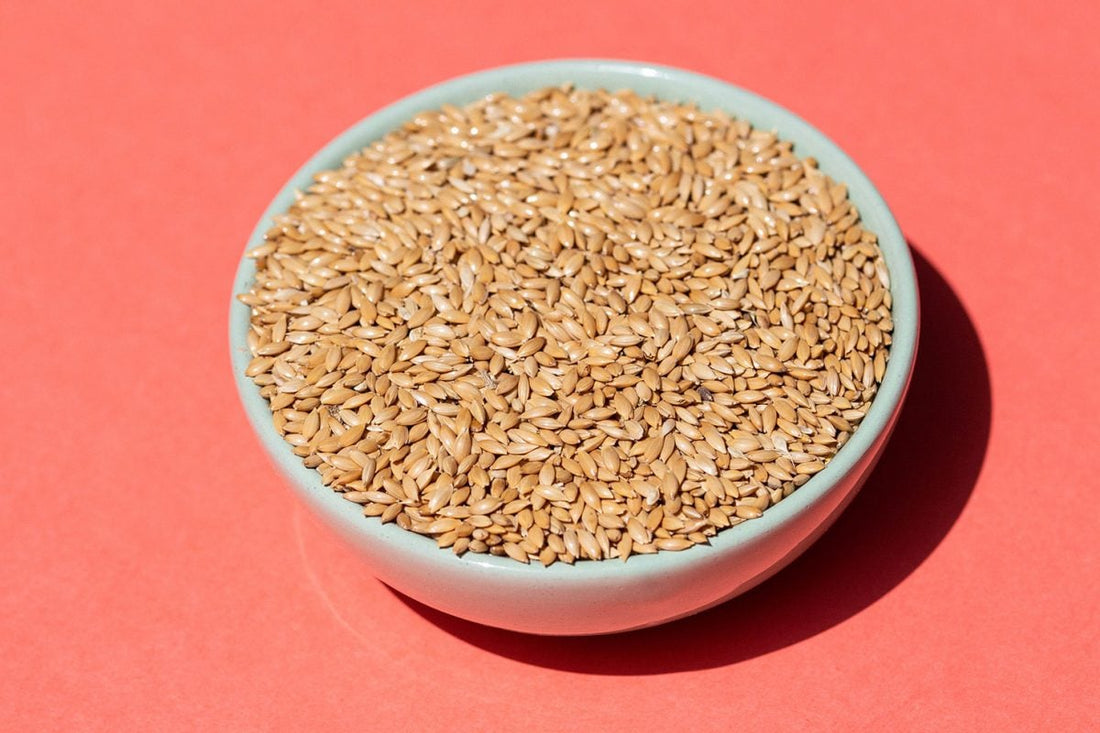
What is it?
Canary seed , or Phalaris canariensis, is a herbaceous plant belonging to the grass family. Native to the Mediterranean, it is commercially cultivated in various parts of the world for its seeds, which are used to feed domestic birds. Historically, its flour was used to make bread.
Canary seed grows as a grass-like herb with cylindrical, hollow stems, wheat-like leaves, and long pods. The seeds are encased in a husk and are brown with a shiny finish.
Properties of canary seed
It is one of the cereals that has many benefits ; the most important finding was the presence of proteins that have stable amino acids that provide very good health to the body.
According to studies, just six tablespoons of canary seed contain more protein than 2 kg of meat, but with stable amino acids, which means they can travel through the body without breaking down and the body can make better use of them.
It works as a lipid or blood fat reducer, a demulcent: it relaxes and softens inflamed areas, and as a diuretic.
It is notable for its omega-3 and omega-9 fatty acid content. It also contains vitamins B and E, and minerals such as calcium, magnesium, manganese, and zinc. Canary seed has enzymes that provide significant benefits for reducing inflammation of the kidneys, liver, and pancreas.
It is one of the cereals most consumed by our customers.
How to take canary seed
It can be eaten as is, accompanying salads, smoothies, and even soups and purees.
We can also prepare canary seed milk by soaking the desired amount of seeds for about eight hours. Once soaked, we wash the seeds and put them in a blender. Once blended, it's ready to drink. We can add a tablespoon of honey.
We recommend, when blending the seeds, adding soy milk or fruit to taste, and you will obtain a very tasty and nutritious smoothie.