

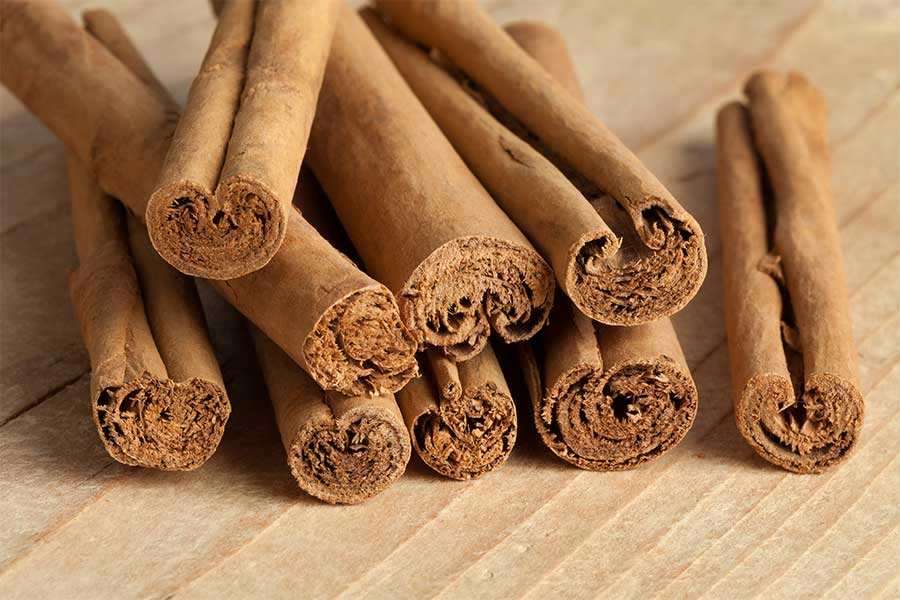
True cinnamon is the inner bark of the cinnamon tree, obtained by peeling the branches. It belongs to the species Cinnamomum zeylanicum, native to Sri Lanka. Its name, meaning "sweet wood," is a fitting description. Today, it is cultivated in India and South Asia. It has been used in culinary dishes, traditional desserts, to scent homes, and also for its medicinal properties. For example, it was traditionally used to help children sleep. And it has long been recognized as a powerful aphrodisiac.
The widespread commercialization of cinnamon for various purposes has popularized two main varieties: Ceylon cinnamon and Cassia cinnamon. Both are different and have distinct health effects, especially when consumed daily.
In this article, we will explore the main difference between the two types of cinnamon and their effects when consumed daily.
"Ceylon cinnamon can cost up to twice as much as Cassia cinnamon."
Is daily consumption of cinnamon dangerous?
Daily consumption of cinnamon is recommended due to its essential oil content. It has been traditionally used to treat respiratory and digestive problems. Its benefits have been the subject of scientific research at many universities, which have found that cinnamon offers numerous health benefits.
First, it has lipid-lowering properties, meaning it can reduce blood lipid levels. Furthermore, it helps reduce the risk of cardiovascular disease and has a positive effect on neurological disorders such as Parkinson's and Alzheimer's. In recent years, studies on cinnamon's effect on regulating blood glucose levels have increased, and although these studies are not yet conclusive, daily cinnamon consumption is already being linked to reductions in blood sugar, triglycerides, and cholesterol.
In short, there are important health reasons to consume cinnamon daily. However, this has also raised concerns about potential liver toxicity, specifically hepatotoxicity, if non-genuine cinnamon is consumed. For the powder version, it's essential to carefully check the label to know.
Which variety is it, since it's ground?
impossible to distinguish them. The Cassia variety is grown mostly in the south of
China, while Ceylon comes from Sri Lanka, India, South Asia and
other parts of the world
Ceylon, the best cinnamon for your health
The original cinnamon is Ceylon cinnamon from Sri Lanka, although the most widely sold has been Cassia cinnamon from southern China. The key difference between the two is their coumarin content.
Coumarin is a compound present in high quantities in Cassia cinnamon, reaching up to 1%, which means that half a teaspoon of Cassia cinnamon (approximately 2 grams) contains 20 mg of coumarin. It is important to note that the European Union (EU) has set a maximum permitted limit of 0.1 mg of coumarin per kilogram of body weight per day to avoid hepatotoxic effects.
According to some studies, the amount of coumarin can vary from one bark to another, and even within the same tree bark. Ceylon cinnamon can have up to 63 times less coumarin than Cassia cinnamon.
Therefore, if you plan to consume cinnamon daily, it is best to ensure that you are consuming Ceylon cinnamon.
Related: